



-
Save the date- Spring Conference at Rocky Gap
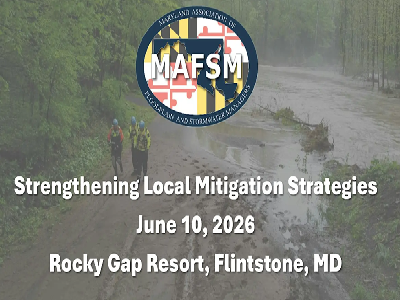
Join us on June 10 for a full day discussion about flooding, mitigation, and all things MAFSM.
Visit 2026 Spring Page >> -
Save the date! Fall Conference - November 5, 2026!
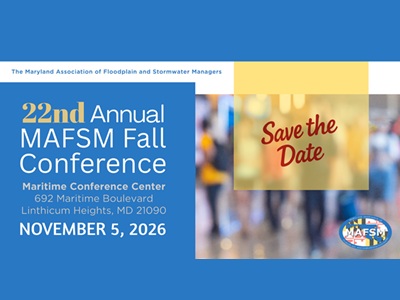
We look forward to seeing you at our 22nd Annual Fall Conference on November 5, 2026!
Visit 2026 Fall Page >> -
Thank you to all who attended our Spring Conference!
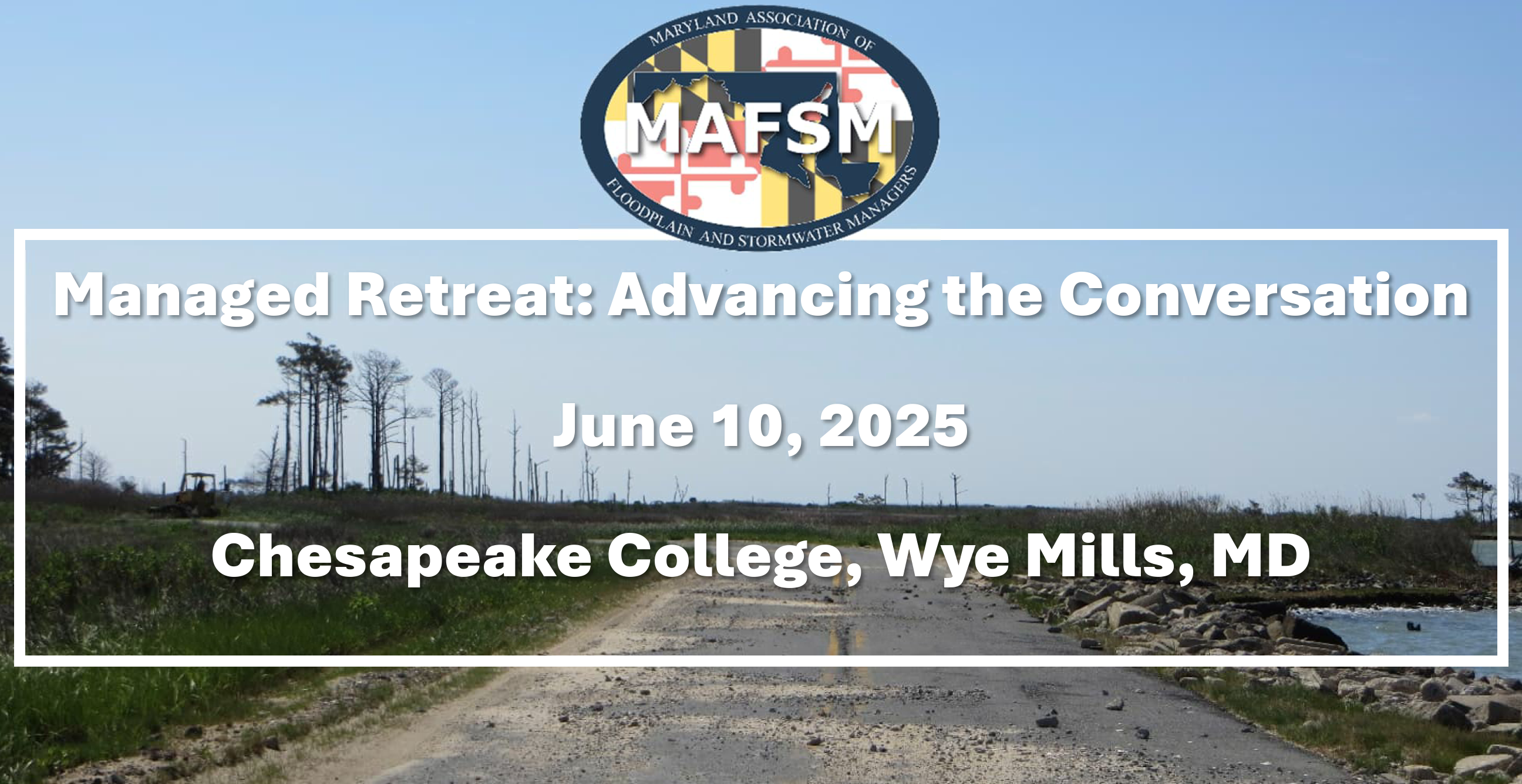
Join us for a day of learning and discussion to begin conversations about managed retreat.
Visit 2025 Spring Page >> -
2025 Fall
Thank you to all who attended our Fall 2025 Conference!
Visit 2025 Fall Page >> -
Activities & Initiatives
Find out more about MAFSM's community Outreach and Activities
Visit Activities & Initiatives Page >> -
Newsletters
View the most recent MAFSM newsletter and browse our newsletter archive.
Visit Newsletters Page >>
Latest MAFSM News
- 2026 NAFSMA Annual Meeting
- NAFSMA 2026 Water Management and Innovation Awards Program Is Open
- ASFPM Foundation Scholarship and Student Paper Competition
- MAFSM to Award Local Official Scholarships for the 2026 ASFPM Conference
- Now Accepting Abstracts for the Fall Conference!
- Webinar – Septic Systems, Flooding & Sea Level Rise in Maryland
- Henrico County is seeking a Floodplain & Dam Safety Program Manager
- Flood Awareness Month – Upcoming MAFSM Webinars
- Flood Awareness Month
- Webinars from Forerunner


MAFSM is offering ASFPM Conference Scholarships. Apply now!
MAFSM is offering up to 3 in-person scholarship registrations and some travel expenses for local government members to attend the ASFPM Conference in Spring 2026. See link for details: https://www.mafsm.org/?p=4714
NAFSMA 2026 Water Management and Innovation Awards Program Is Open. Click below for more information. https://www.mafsm.org/?p=4890
Click below for information about the ASFPM Foundation and their current programs.
https://www.mafsm.org/?p=4780
For the first time, MAFSM is offering up to three in-person scholarship registrations and up to $1,000 for travel expenses for local government members to attend the ASFPM Conference in 2026. For more information, click the link below.
https://www.mafsm.org/?p=4714
Abstract and Scholarship Deadlines EXTENDED for the MAFSM Annual Conference. The new deadline is Friday, 9/5 by 6pm.
Conference scholarships are now also open to former government staff currently seeking employment.
Find abstract & scholarship forms at http://mafsm.org
REGISTRATION IS OPEN!
MAFSM is accepting Speaker Abstracts Until This Friday, August 29 for the annual Conference on November 5, 2025, in Linthicum Heights, MD.
Visit https://www.mafsm.org/ for more Fall 2025 conference info and to register!
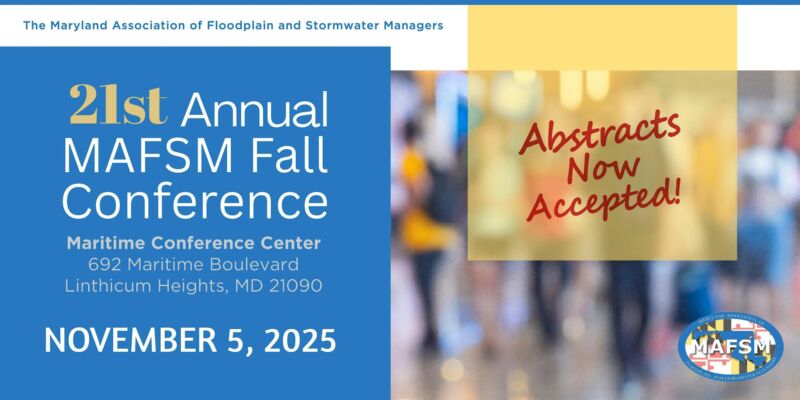
Check out our current news for links for conference registration as well as abstract submittal. We can't wait to see you on November 5th, 2025!
https://www.mafsm.org/?p=4660
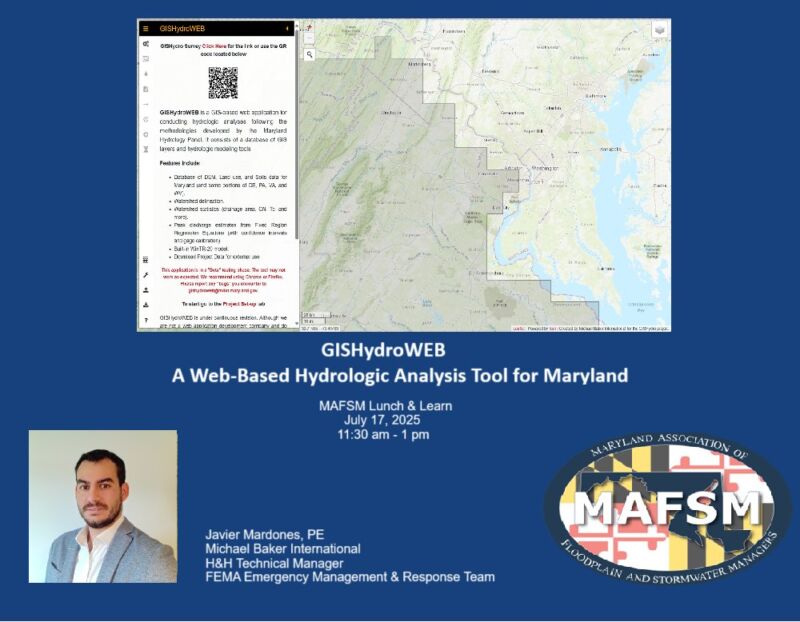
On Thursday July 17th, join us for our next Lunch & Learn. Javier Mardones from Michael Baker International will talk about GISHydroWeb. Click the link below to attend. https://meet.google.com/rru-bncs-mpv
Check out this free webinar on July 22. Septic Systems, Flooding & Sea Level Rise in Maryland. For more information click here: https://www.mafsm.org/?p=4644
Check out the full agenda for our Spring Conference on June 10, 2025!
https://www.mafsm.org/?page_id=4631